

Artificial intelligence may have dominated the agenda at this year’s AES International Automotive Audio Conference in Detroit, but the biggest takeaway was that the future of in-car audio extends far beyond simply making music sound better.
Held under the theme “Automotive Audio in the AI Era,” the three-day event brought together engineers, researchers, OEMs, suppliers and audio specialists to explore how software, machine learning, and advanced processing are transforming the cabin experience.

One of the headline discussions centred around how artificial intelligence could change the way vehicles create and manage sound.
The conference featured research into neural sound synthesis, including work from the Korea Advanced Institute of Science and Technology (KAIST) exploring how vehicle data from CAN-Bus systems can be used to generate realistic, controllable sounds in real time.
Rather than simply replaying recorded engine noises, the technology uses machine learning and Differentiable Digital Signal Processing (DDSP) to create dynamic sounds that could become increasingly relevant as electric vehicles remove many of the acoustic cues drivers associate with internal combustion engines.

While premium audio systems have traditionally focused on delivering the same experience to everyone inside the vehicle, several demonstrations at AES showed a move towards more personalised listening.
Audioscenic demonstrated how head tracking and crosstalk cancellation technology could create spatial audio experiences through headrest-mounted speakers, while Bluacs showcased personalised in-car communication technology with partners including BdSound and Airsound.
The technology could allow passengers to enjoy individual audio experiences without headphones, while also improving applications such as hands-free calls and in-car conferencing.
Another major theme was the increasing role of software in reducing hardware complexity while improving capability.
The Audio Foundry collaborative showcase brought together companies including Dirac, Pioneer, DSP Concepts and GPU Audio to demonstrate how existing automotive computing hardware could be used for more advanced audio processing.
One example showed Dirac Unison’s FIR filtering running through Pioneer hardware powered by Texas Instruments’ AM62 system-on-chip, unlocking more advanced processing without adding requiring additional dedicated hardware.
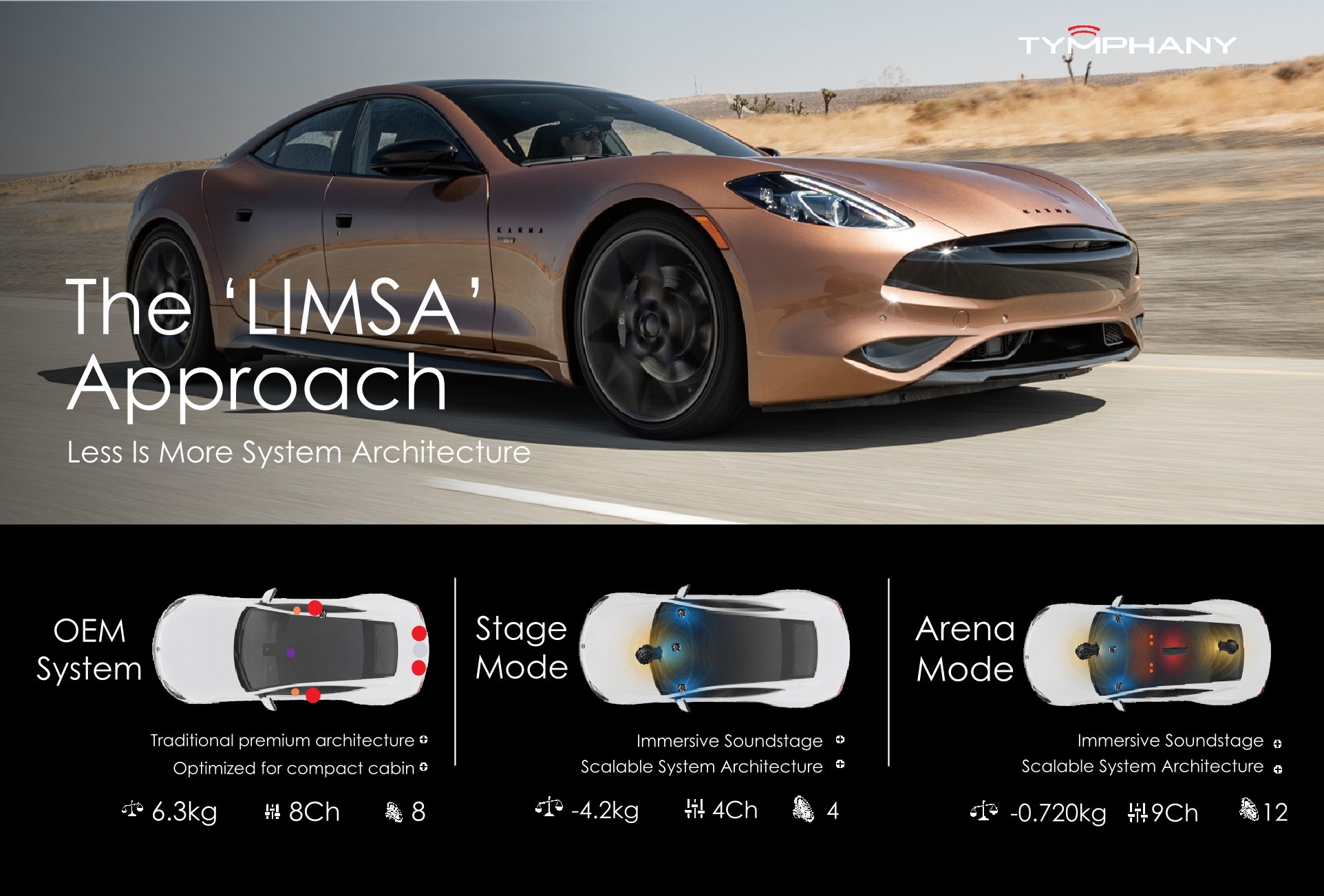
Tymphany also highlighted its Less Is More System Architecture (LIMSA) approach, focusing on scalable audio architectures that combine advanced loudspeaker design, software and system integration.
Meridian Audio presented two technical papers at the conference, including research into audio-tactile systems – technology that allows occupants to physically feel elements of a soundtrack through vibration and haptic feedback.
Developed in collaboration with Jaguar Land Rover’s audio engineering team, Meridian’s study examined whether the balance between the “punch” and “rumble” felt through a vehicle seat should change depending on musical genre. The research, based on testing with 50 participants in a representative automotive seat, forms part of Meridian’s ongoing work into Vibrohaptic Audio.
The company also presented research into acoustic metamaterial lenses, exploring how sound can be directed more effectively around the cabin. Using differentiable simulations, Meridian investigated ways to overcome one of automotive audio’s key challenges: delivering consistent sound quality when occupants are seated away from the ideal listening position.

The event also highlighted how established automotive audio brands are adapting to an increasingly software-defined future.
Pioneer showcased its Premium Integrated Sound Platform, combining integrated amplification, advanced tuning and technologies including Klippel Controlled Sound.
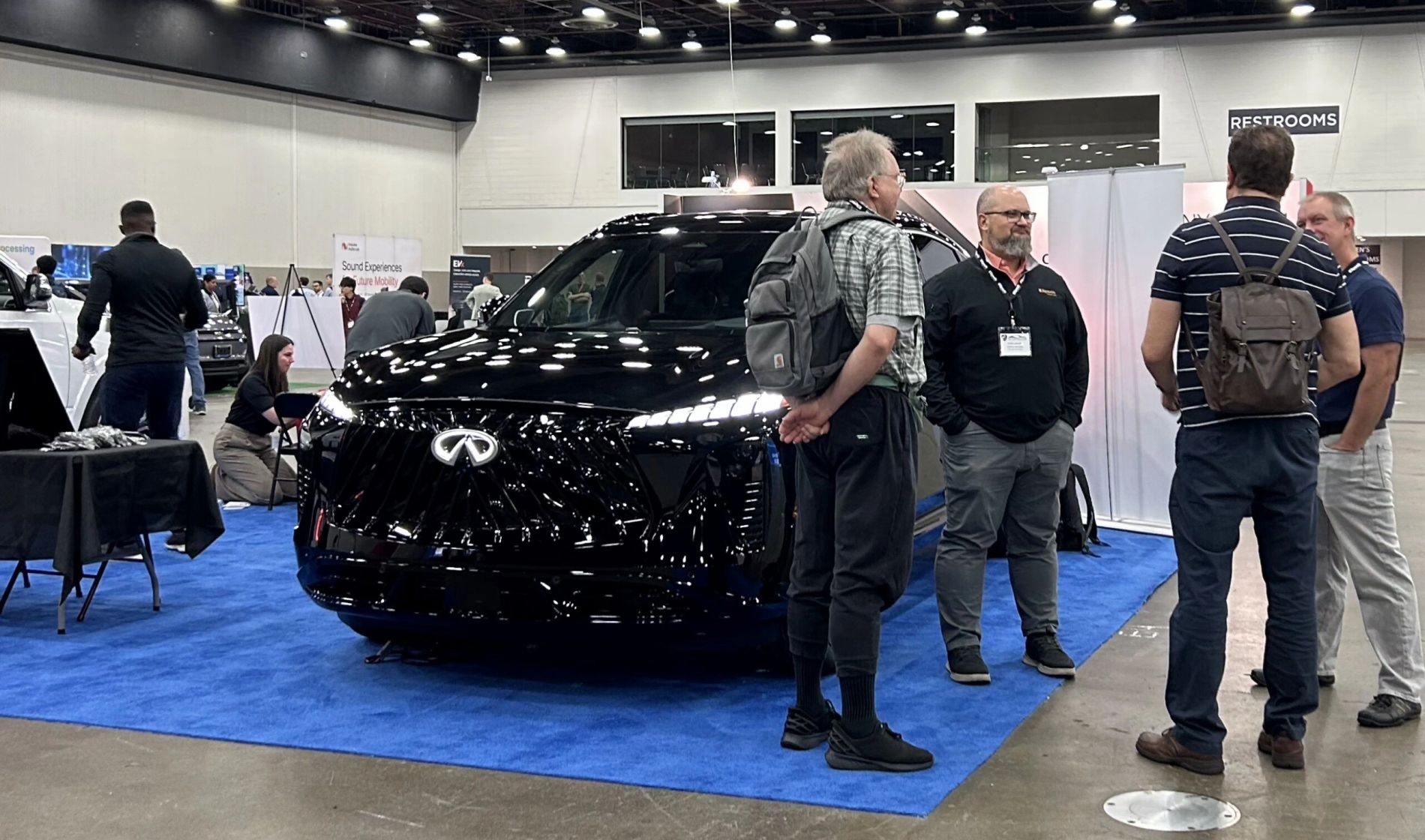
Panasonic Automotive featured an Infiniti QX65 equipped with Klipsch Reference Premiere audio, demonstrating the continued importance of branded audio partnerships as manufacturers look to differentiate vehicle interiors.
Meanwhile, Sennheiser Mobility created one of the most eye-catching demonstrations at the show with a Morgan Motor Company Plus Four fitted with its audio system alongside Aumovio Engineering Solutions’ Ac2ated Sound technology.
The installation combined traditional loudspeakers with actuator-based technology, showing how future systems could use different approaches to create distinctive in-car experiences.
The conference also explored the growing importance of audio as part of a vehicle’s identity.
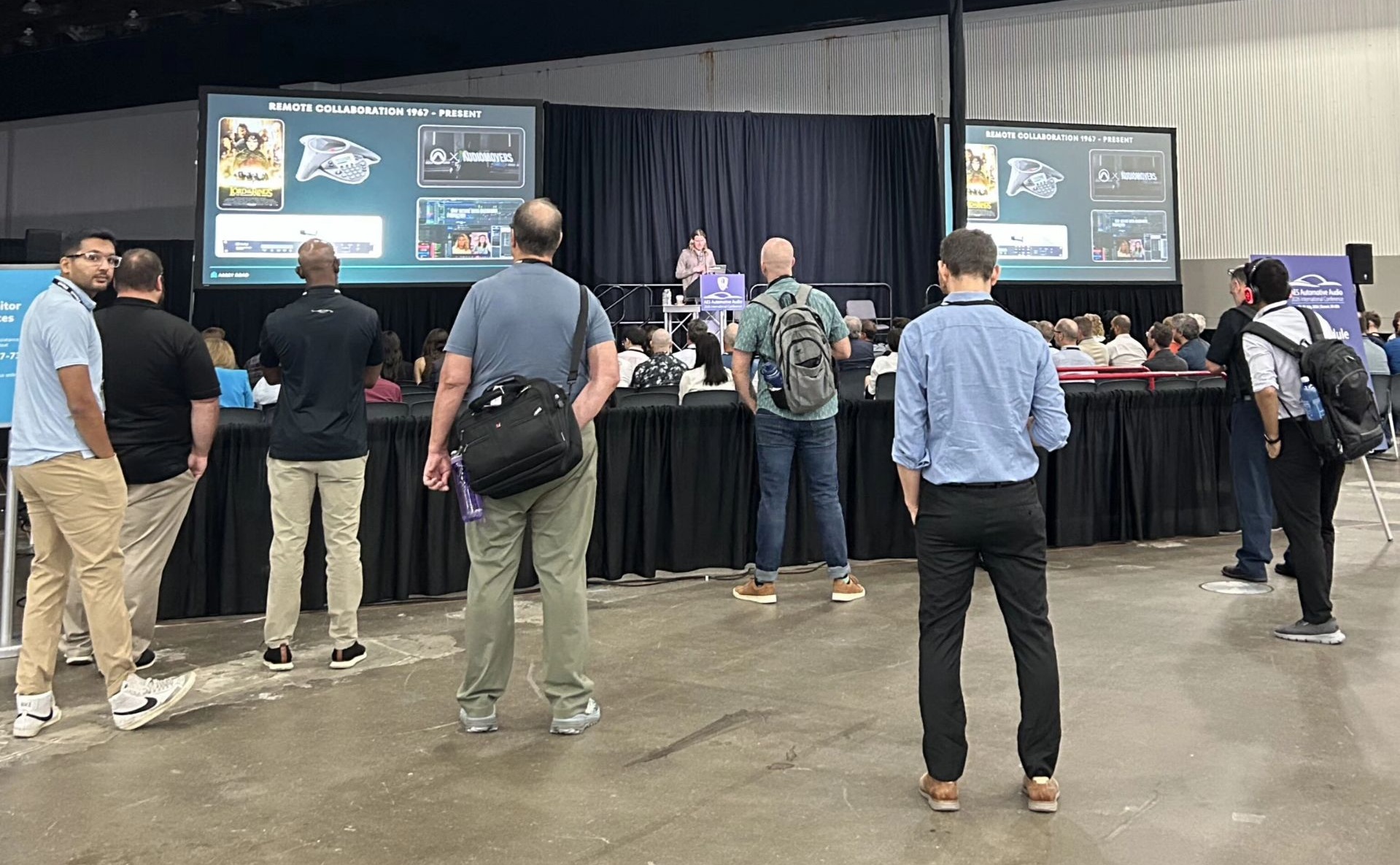
Abbey Road Studios’ head of audio products, Mirek Stiles, discussed how decades of recording expertise are now influencing automotive experiences, following collaborations such as Abbey Road Sound Mode, developed with Bowers & Wilkins for models including the Volvo EX90 and Polestar 3.
Meanwhile, acoustics researcher Dr Sean Olive examined how manufacturers evaluate sound quality, highlighting the continued importance of psychoacoustics, listener preference and how people perceive audio inside a vehicle.

AES Automotive Audio 2026 showed that the future of in-car sound will not be defined by bigger speakers alone.
Instead, the next generation of systems will combine AI, software, sensors and advanced processing to deliver experiences that are personalised, immersive and integrated into the wider vehicle environment.
As vehicles become increasingly software-defined, audio is evolving from a specification-sheet feature into a defining part of the overall in-car experience.


© Copyright 2026 Smart Media Publishing. All Rights Reserved.