
The Consumer Electronics Show (CES) in Las Vegas this week has showcased how the automotive industry is transforming cabins into connected, intelligent spaces. From advanced AI assistants to immersive displays, this year’s innovations underline how software, sensing, and entertainment are redefining the in-car experience. Here are some of the standout developments.
Samsung’s OLED Concepts
Samsung unveiled new OLED display technologies for vehicles, highlighting curved, creaseless foldables and adaptable screens that could shape future dashboards. While no press images of in-car prototypes were released, the above video from CNET and PC Mag shows technology that mirrors a home display, demonstrating ultra-thin panels with high contrast and flexibility. Samsung’s concepts show how displays could evolve from flat panels to immersive, moving interfaces for both drivers and passengers.
Garmin’s Unified Cabin Platform
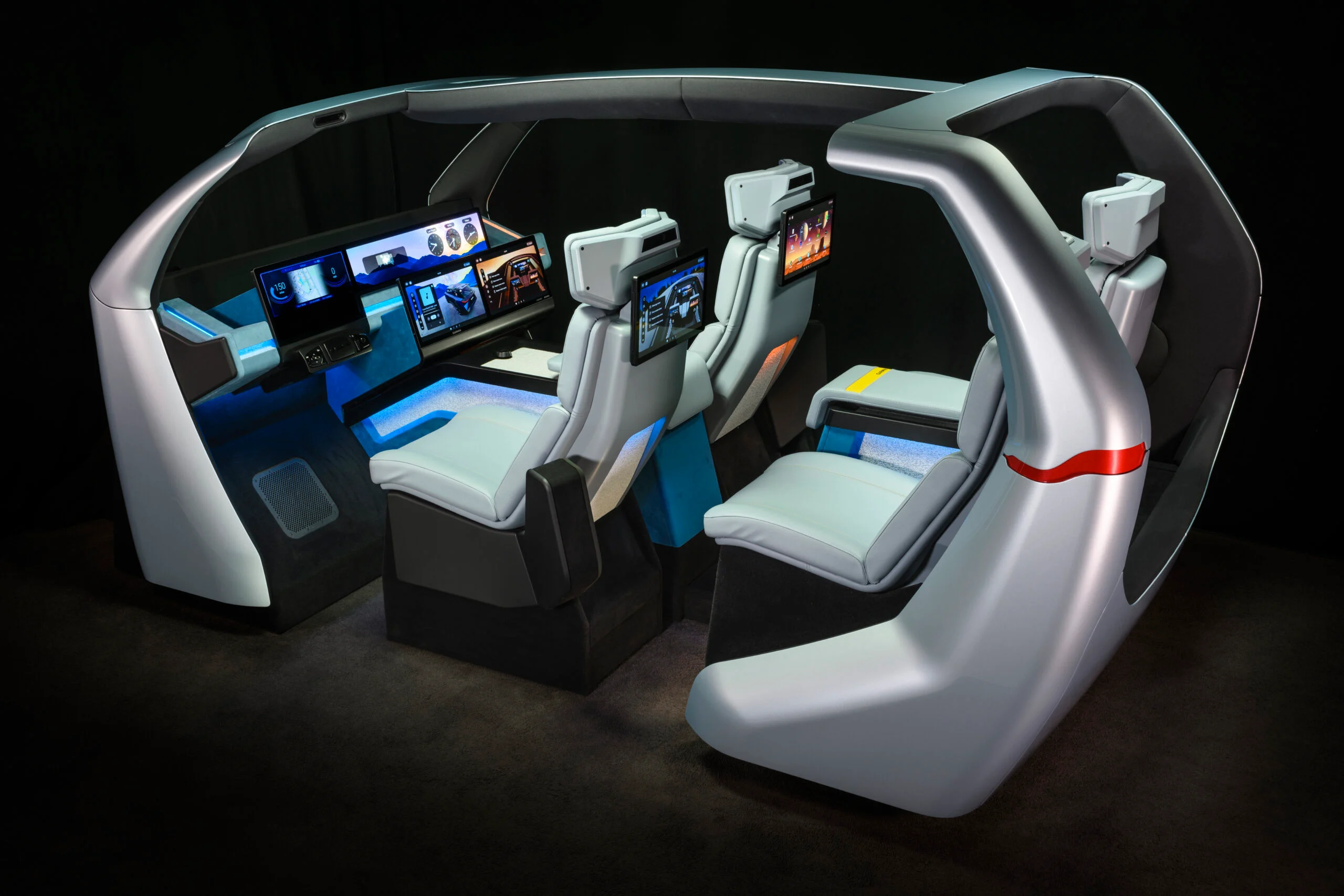
Garmin unveiled its Unified Cabin 2026 system, which consolidates multiple in-cabin screens under a single SoC running Android Automotive OS. The AI-powered platform enables multi-lingual, multi-intent voice commands, per-seat personalised audio and video, synchronised lighting, and even wrist micro gestures via a Meta Neural Band concept. The setup creates a fully coordinated in-car experience, with six screens acting as one continuous interface for entertainment, navigation, and passenger comfort.
Alps Alpine’s Hidden Driver Monitoring
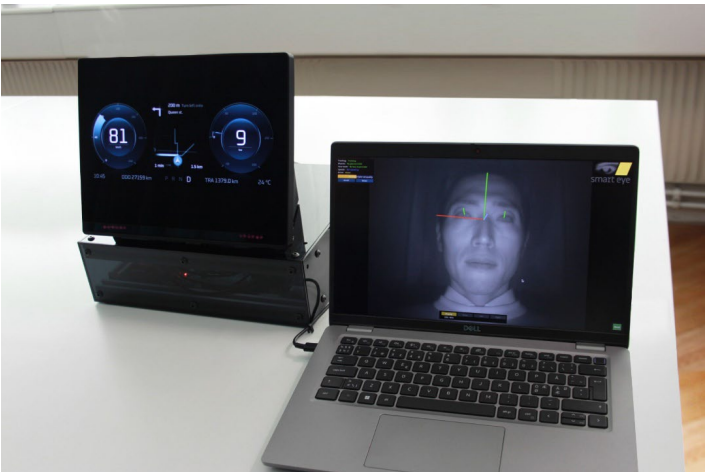
Alps Alpine showcased an under-display driver monitoring camera, created in collaboration with Smart Eye, leveraging AUO Mobility Solutions’ Under Display Camera (UDC) technology, that sits completely hidden beneath the dashboard screen, preserving interior design while delivering robust safety features. The multi-modal sensing platform tracks seating positions, body posture, and movement, feeding information to airbags, seatbelts, and other safety systems. Haptic feedback on surfaces guides drivers subtly, creating an interior that adapts to human behaviour rather than forcing interaction.
.png)
P3 and VNC Automotive’s Seamless Smartphone Integration
P3, in collaboration with VNC Automotive, introduced full smartphone connectivity on the SPARQ OS infotainment platform. Cobalt Link+ enables Apple CarPlay, Android Auto, and advanced mirroring without additional certification, giving drivers complete access to apps, music, and navigation directly from the vehicle’s screens. The solution, already deployed for a major OEM, reduces development complexity while elevating the in-car user experience.


© Copyright 2026 Smart Media Publishing. All Rights Reserved.