
A BBC News story published last week about connected car security has prompted debate across the vehicle security industry after its original headline suggested trackers could not be relied upon to recover stolen vehicles.
Originally published under the headline “Don’t expect trackers to save your stolen car, experts say”, the article by BBC tech and AI editor Zoe Kleinman centres on the theft of technology analyst Ian Fogg’s Kia, which disappeared despite the vehicle being fitted with KiaConnect, plus a hidden Apple AirTag inside. The headline has since been revised to refer specifically to inbuilt trackers.
Among the first to question the wording was John Milbank, content editor at Bennetts BikeSocial, who argued the headline failed to distinguish between manufacturer convenience features and dedicated vehicle recovery systems.
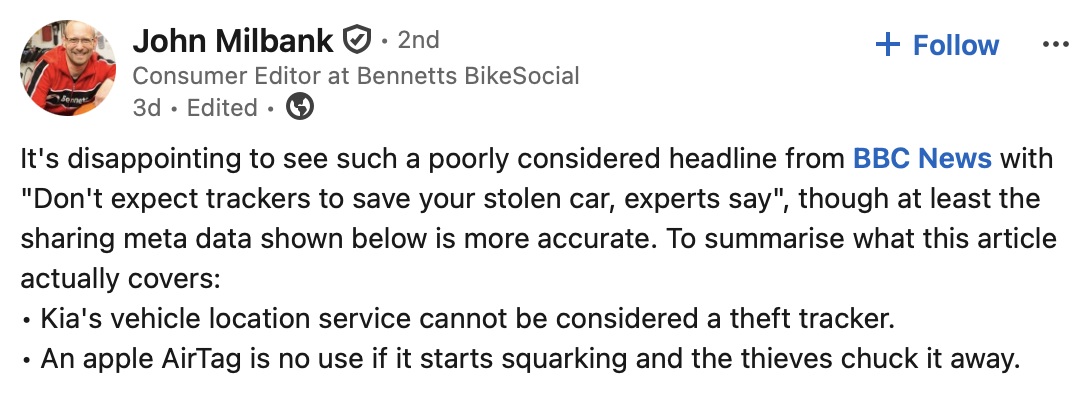
Milbank wrote: “It’s disappointing to see such a poorly considered headline from BBC News.”
He pointed out that Kia Connect “cannot be considered a theft tracker”, while an Apple AirTag is of limited use if discovered and discarded by thieves.
Instead, he argued, professionally installed and monitored tracking systems remain highly effective, adding that where police resources allow, they continue to play a significant role in recovering stolen vehicles and disrupting organised vehicle crime.
The comments were echoed by Dan Balsamini, sales director at Scorpion Automotive, who welcomed the BBC's revised headline.
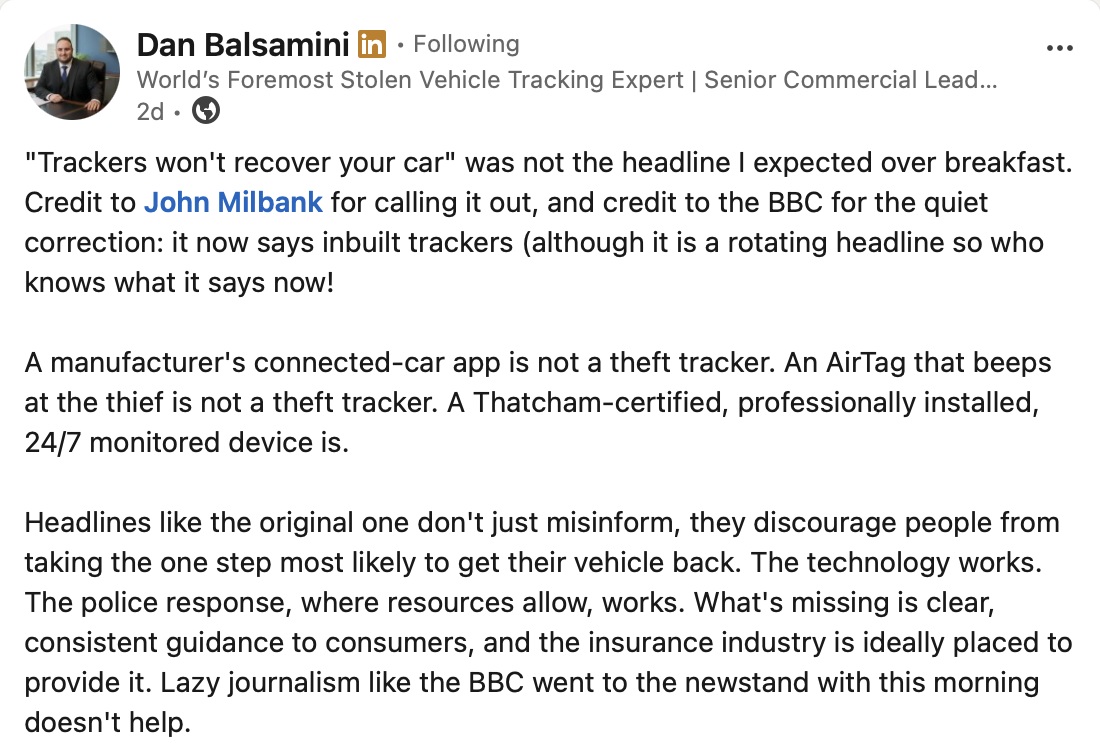
He said: “‘Trackers won’t recover your car’ was not the headline I expected over breakfast. Credit to John Milbank for calling it out, and credit to the BBC for the quiet correction.”
Balsamini added: “A manufacturer’s connected-car app is not a theft tracker. An AirTag that beeps at the thief is not a theft tracker. A Thatcham-certified, professionally installed, 24/7 monitored device is.”
He argued that headlines suggesting otherwise risk discouraging motorists from investing in dedicated stolen vehicle recovery technology, despite evidence that professionally monitored systems continue to achieve strong recovery rates.
The BBC article itself featured comments from Thatcham Research, which also highlighted the distinction.
Thatcham said connected car apps are designed primarily as convenience features rather than certified security products, recommending motorists choose independently approved stolen vehicle tracking systems with dedicated monitoring centres and their own power supplies if theft recovery is a priority.
Other industry figures also used the article to reinforce the same message.
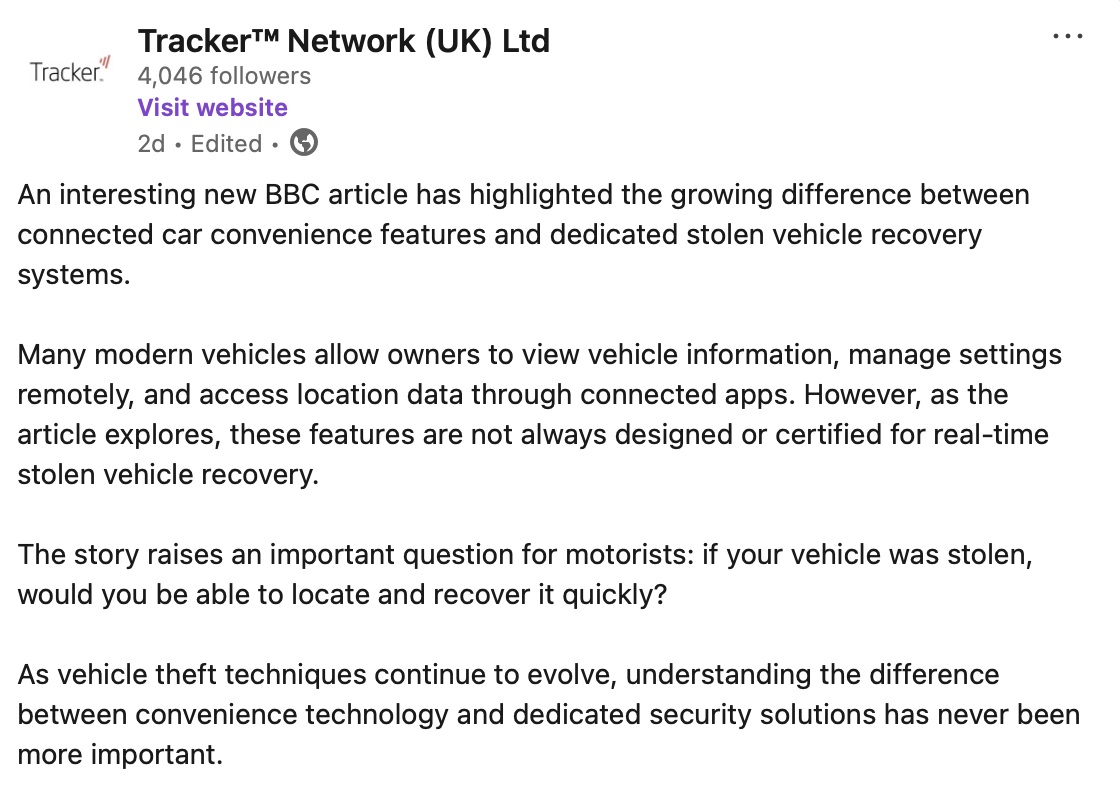
Tracker said in a social media post that the story highlighted “the growing difference between connected car convenience features and dedicated stolen vehicle recovery systems”, encouraging motorists to understand that factory-connected apps and professional security systems serve very different purposes.
Meanwhile, Stephen McCombe, commercial director at Global Insurance Management said the article reinforced why professionally monitored, Thatcham-approved tracking devices remain an important part of dealer security packages, particularly as vehicle theft techniques continue to evolve.
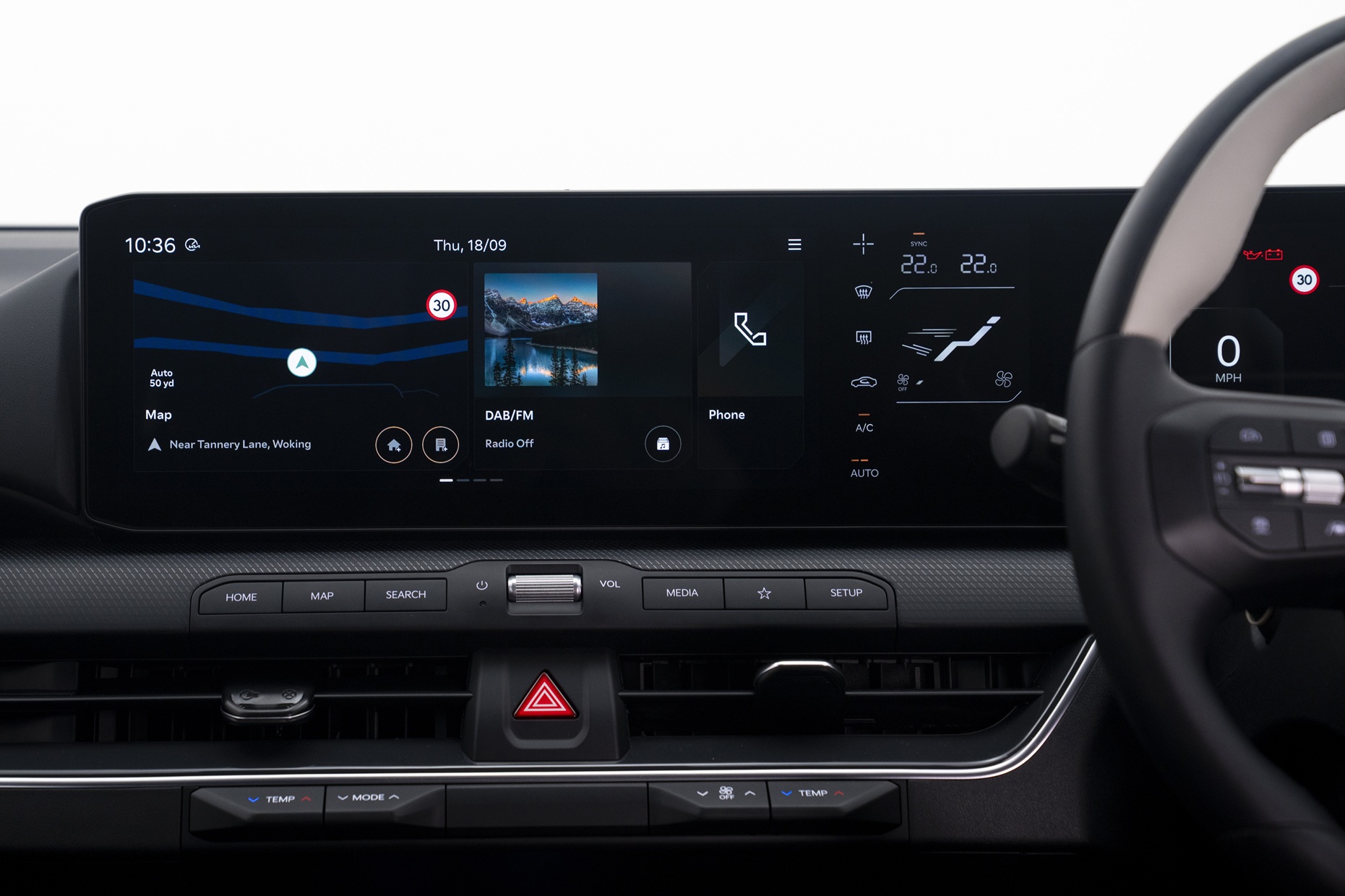
While the original BBC headline drew criticism, it highlighted a broader issue: many motorists do not distinguish between manufacturer-connected services and dedicated stolen vehicle recovery systems. Modern connected car apps offer features such as remote locking, vehicle status information, and location services, but the industry consensus remains that they are not replacements for professionally monitored recovery systems designed specifically for theft detection, police liaison, and vehicle recovery.
As more vehicles become permanently connected, the distinction between convenience technology and genuine security systems is becoming increasingly important for motorists to understand.


© Copyright 2026 Smart Media Publishing. All Rights Reserved.