

Panasonic has developed a new active noise cancellation system that tackles two of the biggest sources of unwanted sound in a car: road noise and engine noise.
The technology makes its production debut in the standard audio systems of the X and G grades of Nissan’s new Elgrand people carrier in Japan. It combines vibration sensors, digital signal processing and the vehicle’s speakers to create sound waves that counteract unwanted noise inside the cabin.

Road and engine noise have traditionally required different approaches because they behave differently. Engine noise cancellation has often focused on lower frequencies, while road noise varies with the surface, vehicle speed and driving conditions. Panasonic’s new system is designed to handle both at once, across a broader range of frequencies.
Accelerometers positioned around the vehicle detect vibrations associated with noise entering the cabin. Panasonic’s processing algorithms use these signals to predict the resulting sound and calculate a response. The car’s speakers then play an opposing sound wave, reducing the unwanted noise through a process known as destructive interference.

The system continuously adjusts its output as road and driving conditions change, aiming to maintain a quieter cabin without interfering with the sounds occupants actually want to hear. Music, conversations and phone calls should remain clear because the technology targets specific sources of unwanted noise rather than suppressing sound indiscriminately.
The approach builds on Panasonic’s existing automotive noise-control technology, which the company says is already used across more than 60 vehicle models from at least five manufacturers. The new integrated system is described by Panasonic as the world’s first to combine road and engine noise cancellation in a production series-hybrid vehicle, based on its research as of July 2026.
The Nissan Elgrand uses the latest generation of Nissan’s e-POWER series-hybrid drivetrain, in which a petrol engine generates electricity to power the electric drive system. Managing engine noise is therefore particularly relevant, as the engine’s operation does not necessarily correspond directly to road speed.
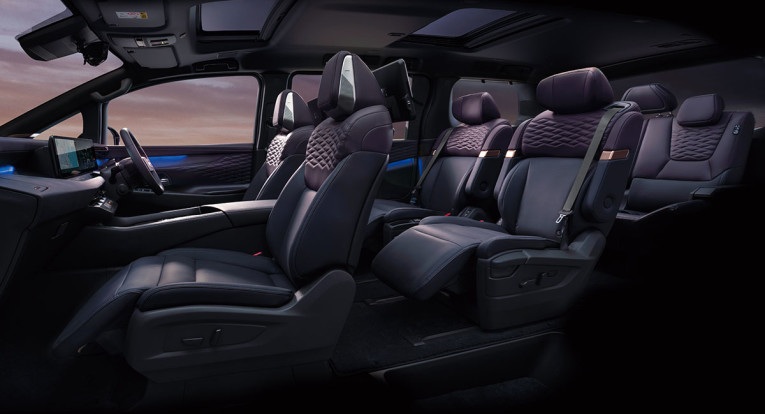
The new Elgrand is also available with a separate Bose premium audio system featuring 22 speakers, with some mounted in the headrests. However, Panasonic’s announcement specifically confirms the new noise-cancellation technology in the standard audio systems of the X and G grades.
For car audio, the development highlights how the speakers fitted to modern vehicles can do more than reproduce music. By using them to manage unwanted sound as well, manufacturers can work towards quieter, more comfortable cabins without simply adding more sound-deadening material.


© Copyright 2026 Smart Media Publishing. All Rights Reserved.