
There’s a good chance your car audio system is fighting against the vehicle itself.
Glass reflects sound. Plastic trim creates odd resonances. Seats absorb certain frequencies. Your right ear is much closer to some speakers than your left. Even the best speakers can end up sounding confused, harsh or flat once they’re installed in an actual car.
That’s where a DSP (Digital Signal Processor) comes in.

Think of it as the brains of the system. A DSP sits between your music source and your speakers, allowing you or your installer to fine-tune exactly what each speaker receives. It can delay speakers by fractions of a second so sound arrives at your ears at the same time, correct awkward frequency peaks and dips, and divide the audio spectrum between tweeters, mids and subwoofers far more accurately than basic crossovers.
The result? Better clarity, better imaging, tighter bass and a soundstage that appears across the dashboard instead of somewhere near your right knee.
Some DSPs are standalone processors designed to work alongside separate amplifiers. Others combine DSP and amplification in one compact unit, making them ideal for modern OEM upgrade projects.
It’s also worth noting that some modern head units include basic DSP functions, and for many drivers this might be enough, but dedicated units generally offer far more adjustment, greater processing power, more channels and better integration with factory audio systems.
Here are some of the best options available right now.
Note: Prices shown are typical UK retail prices at the time of writing – shop around, as deals vary, and professional installation and tuning may incur additional costs.

Mention DSPs in serious car audio circles and Helix usually appears within about 30 seconds.
The DSP PRO MK3 sits near the top of the company’s range and offers the sort of processing power normally associated with competition-level builds. Twin DSP architecture, extensive routing options, virtual channels and Helix’s acclaimed DSP PC-Tool software make it one of the most capable processors available.
Yes, there’s a learning curve. No, it isn’t cheap. But if you’re building a high-end active system and want virtually unlimited tuning potential, the 10-channel PRO MK3 with a 96 kHz/32-bit signal path remains one of the industry’s benchmark products.
Other Helix options, including the DSP MINI MK2, DSP.3S and flagship DSP Ultra S, are also worth exploring.

Phoenix Gold describes the ZDSP8 as its most competitive DSP yet, and it’s easy to see why.
Built around a premium Burr Brown DAC and offering eight channels of processing, Bluetooth streaming, OEM integration features and 31-band parametric EQ capability, it delivers a specification that would have seemed remarkable at this price only a few years ago.
Particularly clever features include OEM Impedance Simulation, which helps preserve factory system functionality, and Input Priority technology that allows multiple source types to coexist without losing important vehicle alerts.
For enthusiasts seeking serious tuning capability without getting close to four-figure territory, the ZDSP8 offers exceptional value.
Modern factory audio systems can be surprisingly difficult to upgrade.
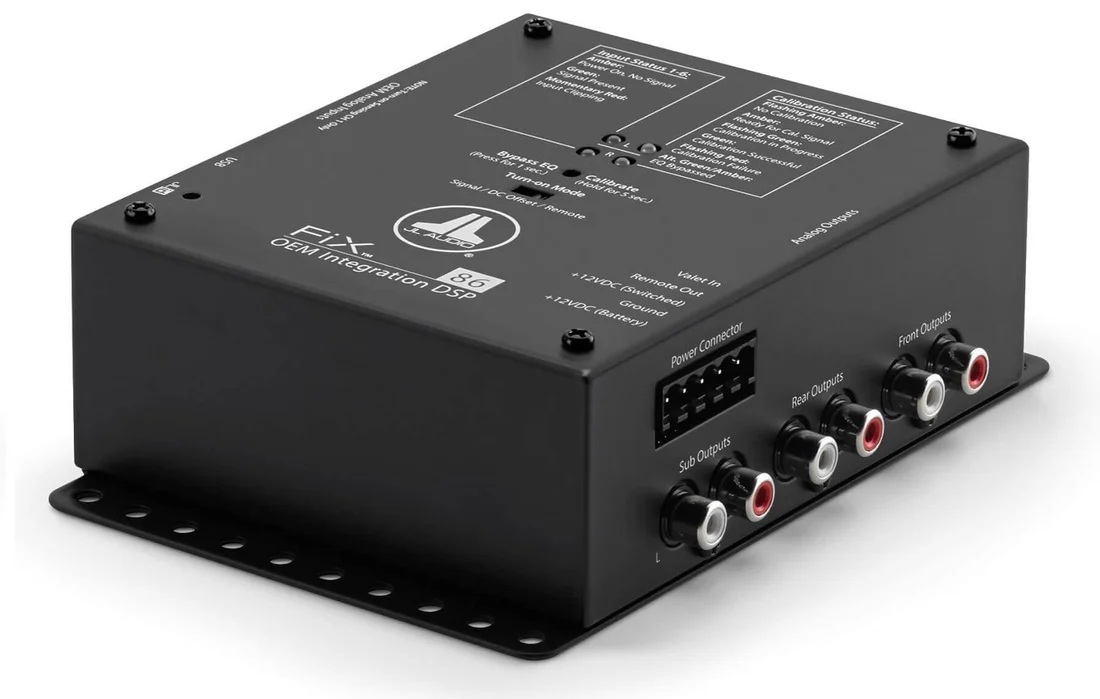
Many use complicated equalisation curves, factory time alignment and multiple speaker outputs that make integration challenging. The JL Audio FiX-86 was designed specifically to solve that problem.
Its standout feature is automatic calibration. Press a button, wait around 30 seconds, and the processor analyses and corrects the factory signal before passing it on to your aftermarket equipment.
For leased vehicles, daily drivers and subtle upgrades, it’s one of the smartest routes into better sound quality.
If you prefer a DSP amplifier rather than a standalone processor for a simple upgrade, Audiotec Fischer’s compact Match M5.4DSP, priced around £519, offers another OEM-friendly approach.
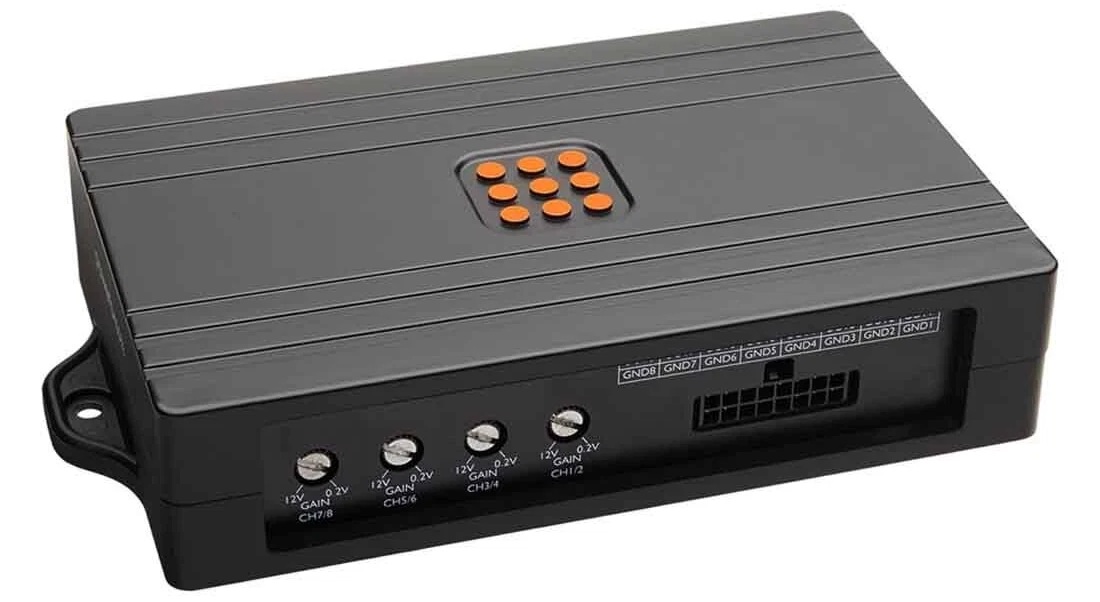
The eight-channel Powerbass PBX-DSP8 focuses on giving enthusiasts plenty of tuning tools without asking them to remortgage the house.
With eight inputs, eight outputs, 32-bit processing, 31-band EQ on every channel, adjustable crossovers, delay controls and app compatibility, it covers all the core DSP functions most users will ever need.
The compact chassis also makes installation relatively straightforward, whether you’re integrating with a factory system or building a more ambitious set-up.
For the money, it’s a lot of DSP.
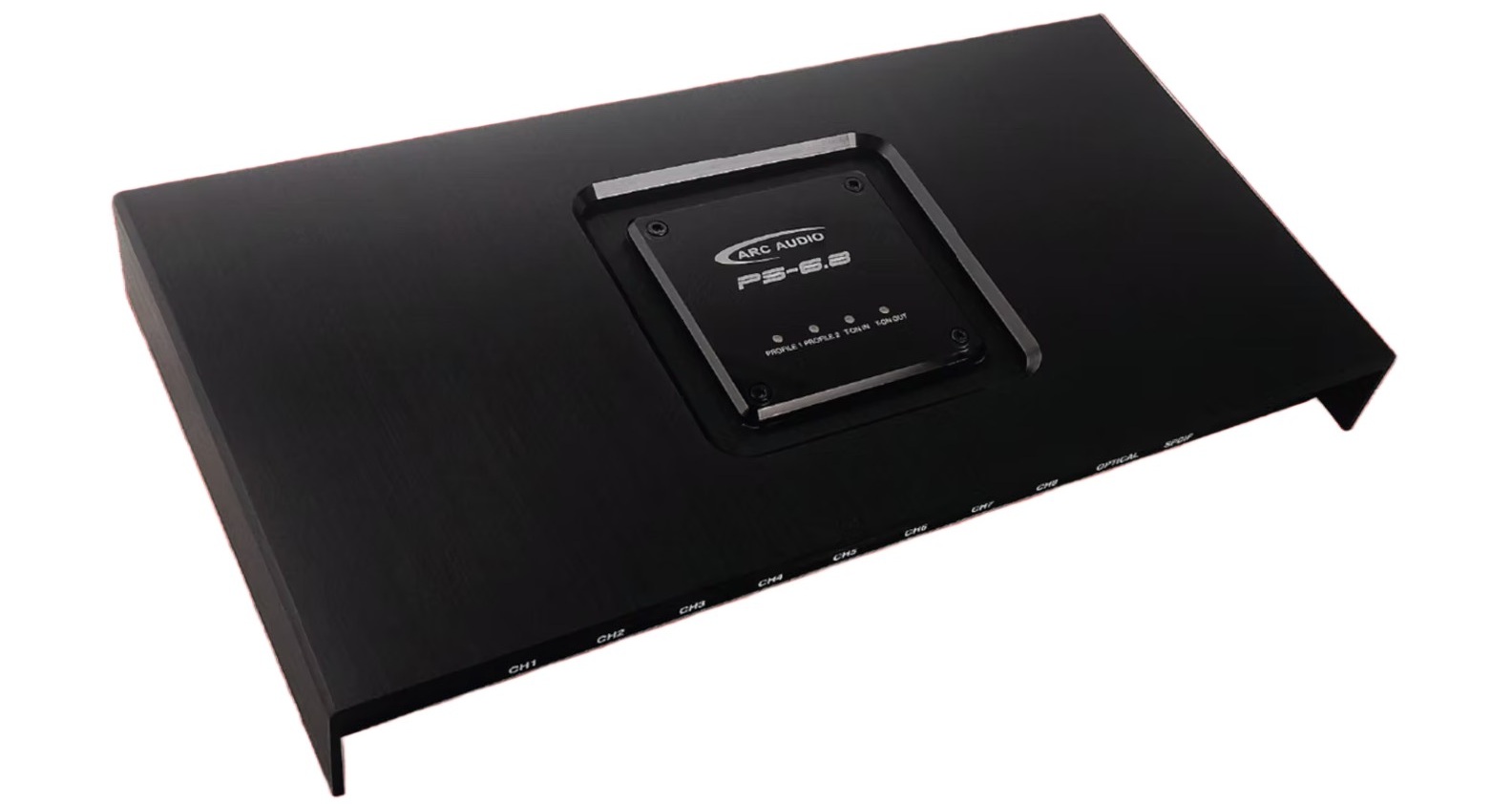
ARC Audio has long been respected by installers for creating products that prioritise sound quality and flexibility.
The eight-channel PS 6.8 continues that tradition with 32-bit processing, extensive parametric equalisation, open crossover architecture, signal delay controls and support for multiple presets.
The accompanying ARC DNA software provides deep tuning functionality, making it particularly attractive for enthusiasts who enjoy experimenting and squeezing every last drop of performance from their systems.
It’s not the easiest DSP on this list, but it rewards those willing to spend time learning its capabilities.
.jpg)
If you’re building a serious sound system and want one box to handle almost everything, the Audison AF C8.14 bit is difficult to ignore.
This compact eight-channel DSP amplifier delivers 8 x 65W RMS at 4 ohms or 8 x 100W RMS at 2 ohms, alongside a powerful 24-bit/96kHz DSP platform capable of handling active systems, complex crossover networks and precise time alignment. It’s also High-Resolution Audio certified, with a frequency response stretching beyond the limits of human hearing.
The real appeal is flexibility. You can run front and rear speakers directly, bridge channels for more power, add external amplifiers later, and tune almost every aspect of the system through Audison’s comprehensive software.
For enthusiasts who want premium sound without filling the boot with separate processors and amplifiers, this is a very complete solution.
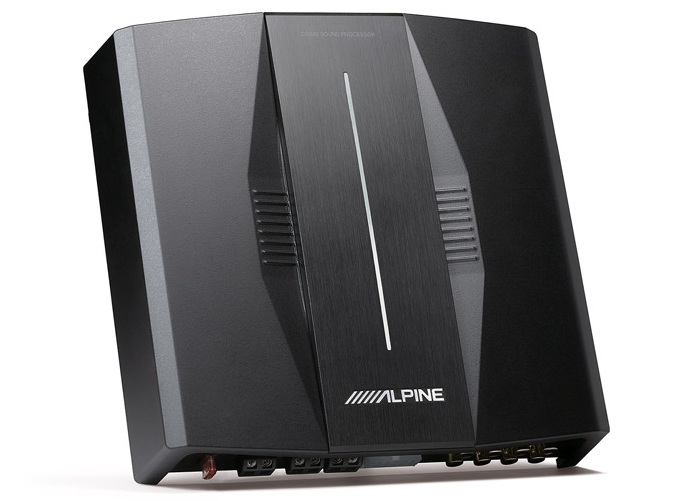
DSP tuning can feel intimidating. The Optim8 exists to remove much of that headache.
Alpine has built automatic tuning technology into this eight-channel DSP amplifier, allowing the unit to analyse your vehicle’s acoustics and generate a tailored set-up without requiring an advanced understanding of DSP software.
Its built-in amplifier delivers 6 x 35W RMS plus 2 x 130W RMS channels for subwoofer or high-output mid-bass drivers, making it capable of running an entire system from a single chassis.
And manual control is still available if you want it. There are 31-band EQs, crossover controls, time alignment functions and plenty of adjustment options for experienced users. But the ability to get impressively good results without spending an entire weekend learning DSP terminology makes this stand out.
If you’re the sort of person who wants better sound but doesn't fancy becoming an acoustic engineer overnight, Alpine has done much of the hard work for you.
.jpg)
Entry-level doesn’t have to mean basic.
The Goldhorn DSPA 406 V2.0 combines four channels of Class AB amplification with extensive DSP functionality and one feature that’s surprisingly rare at this price point – OTG digital input.
This allows users to connect a smartphone directly and bypass many of the limitations imposed by factory head units, delivering a cleaner digital signal straight into the processor. Bluetooth 5.0, 31-band output EQ, delay adjustment and multiple input options add further flexibility.
The built-in Class AB amplifier produces 4 x 65W RMS, enough to give factory speakers a noticeable kick while adding proper DSP control.
It’s aimed squarely at first-time DSP buyers and budget-conscious enthusiasts, but there’s enough functionality here to make it relevant long after the initial installation.
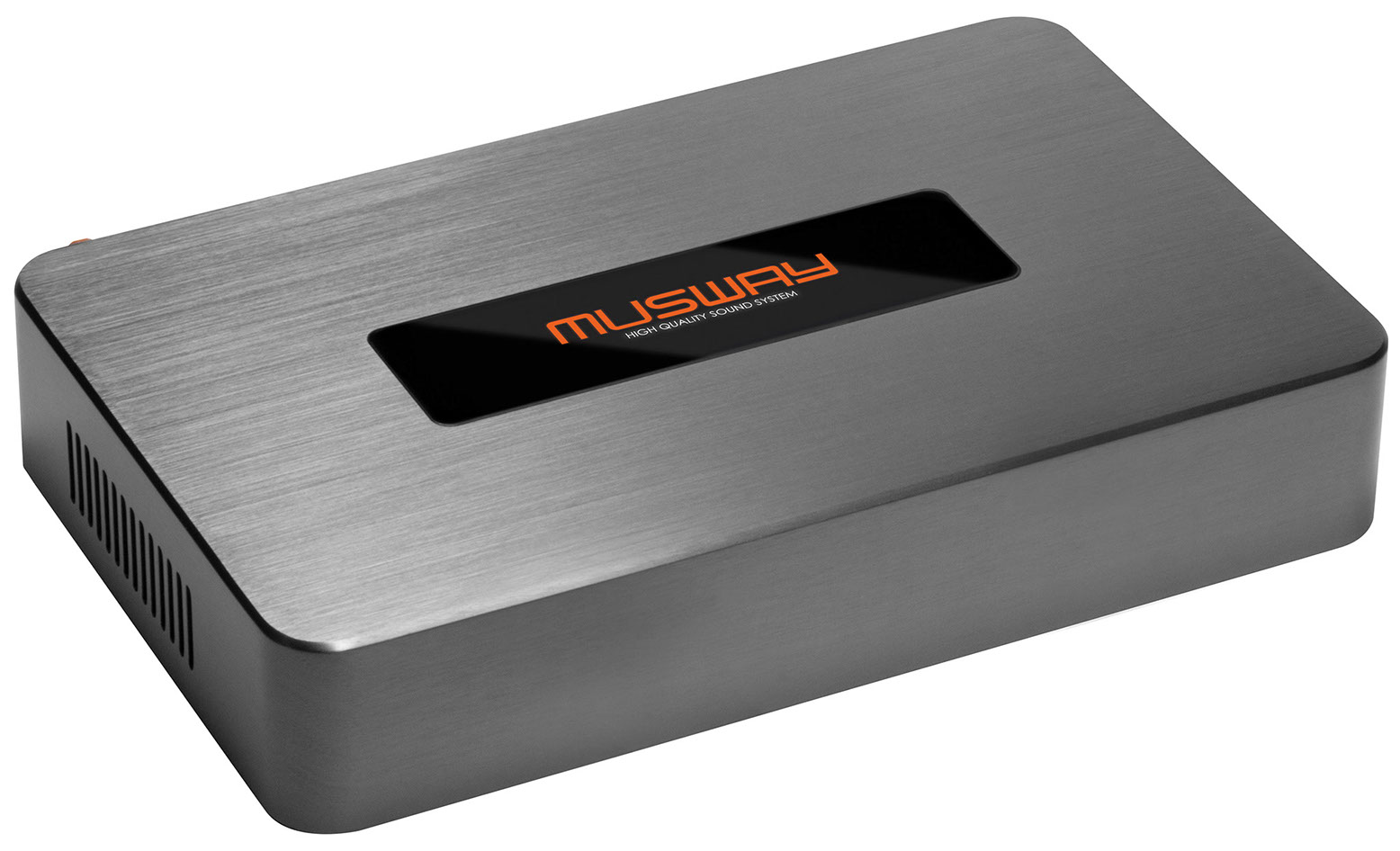
The Musway D8V4 is one of those products that makes you check the dimensions twice.
Despite measuring just 205 x 127 mm, it produces 8 x 70W RMS at 4 ohms or 8 x 100W at 2 ohms, alongside a sophisticated 10-channel DSP platform.
The latest version uses upgraded Infineon power chips, increasing output significantly while retaining the remarkably compact footprint. Bluetooth connectivity, smartphone control, optical inputs and optional accessories add further flexibility.
For modern vehicles where installation space is disappearing rapidly, the D8V4 proves you don't necessarily need a huge amplifier rack to achieve impressive results.
.jpg)
DLS has quietly built a reputation for producing products that sound musical rather than merely technical – available in the UK through new distributor Sloth Poppy.
The PE4.8DA combines a Class D amplifier delivering 4 x 50W RMS with comprehensive DSP functionality, offering 31-band EQ, flexible crossover options, time alignment and Smart Load high-level inputs designed specifically for modern factory systems.
It delivers enough power for most speaker upgrades while keeping installation complexity under control, making it particularly attractive for OEM integration projects.
If your goal is better sound without sacrificing factory functionality, this Swedish-designed option deserves serious consideration.
Not sure which route to take?
• You’re upgrading from scratch
• Space is limited
• You need amplification as well as processing
• You want fewer components to install
Check out what all of the amplifier tech jargon means in our buying guide.
• You already have amplifiers
• You plan to upgrade in stages
• You want maximum flexibility
• You’re building a fully active system
Either way, a DSP is one of the few upgrades that can improve almost every speaker in the car at the same time.
People often spend hundreds or thousands of pounds on new speakers and amplifiers, then wonder why the results aren’t quite what they expected. That’s because even great hardware is still working inside a challenging acoustic environment.
A properly configured DSP doesn’t simply make your system louder. It makes it smarter.
And in car audio, smarter usually sounds a lot better.


© Copyright 2026 Smart Media Publishing. All Rights Reserved.